-
Friday, 05 March 2010 14:39
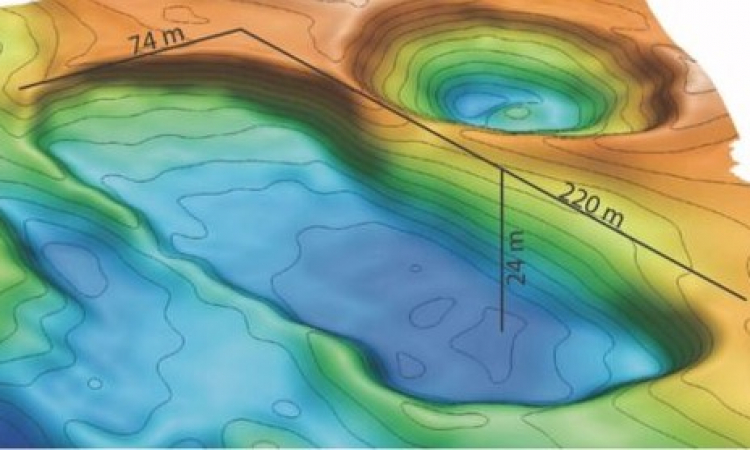
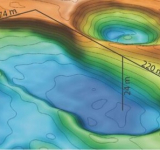
A section of the Arctic Ocean seafloor that holds vast stores of frozen methane is showing signs of instability and widespread venting of the powerful greenhouse gas, according to the findings of an international research team led by University of Alaska Fairbanks scientists Natalia Shakhova and Igor Semiletov.
The research results, published in the March 5 edition of the journal Science, show that the permafrost under the East Siberian Arctic Shelf, long thought to be an impermeable barrier sealing in methane, is perforated and is leaking large amounts of methane into the atmosphere. Release of even a fraction of the methane stored in the shelf could trigger abrupt climate warming.
“The amount of methane currently coming out of the East Siberian Arctic Shelf is comparable to the amount coming out of the entire world’s oceans,” said Shakhova, a researcher at UAF’s International Arctic Research Center. “Subsea permafrost is losing its ability to be an impermeable cap.”
Methane Gas Stores Becoming Unstable
|
-
Wednesday, 03 March 2010 10:57
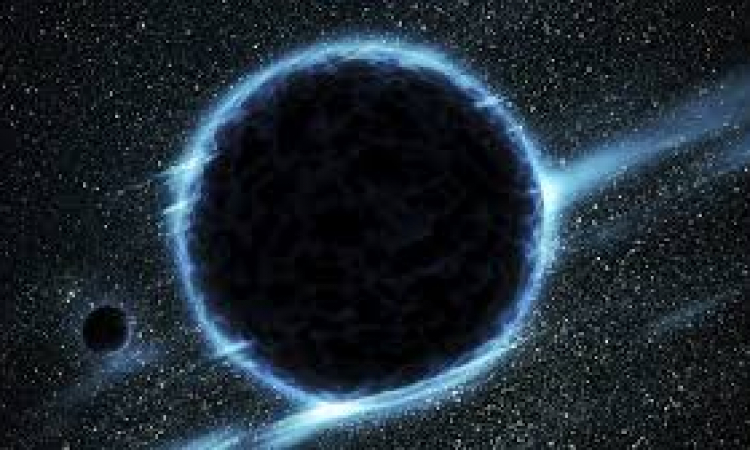
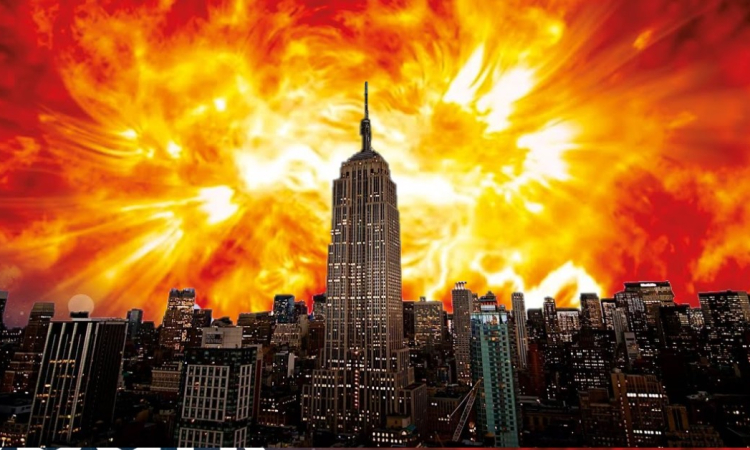
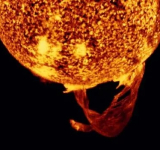
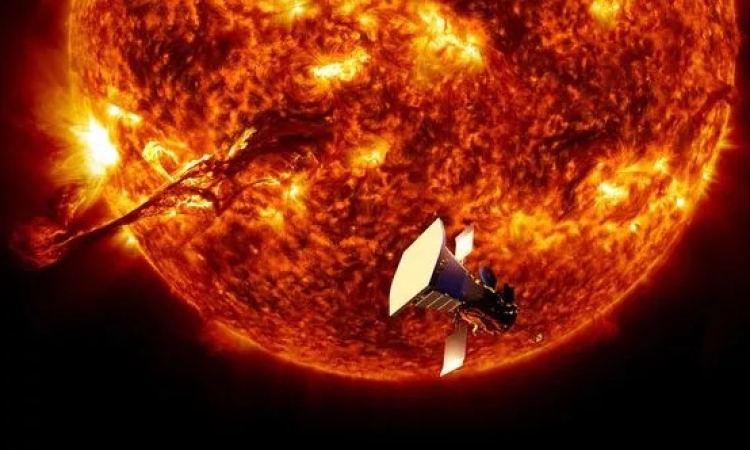
A massive solar storm could leave millions of people around the world without electricity, running water, or phone service, government officials say.
That was their conclusion after participating in a tabletop exercise that looked at what might happen today if the Earth were struck by a solar storm as intense as the huge storms that occurred in 1921 and 1859.
Solar storms happen when an eruption or explosion on the surface of the sun sends radiation or electrically charged particles toward Earth. Minor storms are common and can light up the Earth's Northern skies and interfere with radio signals.
Every few decades, though, the sun experiences a particularly large storm. These can release as much energy as 1 billion hydrogen bombs.
How Well Can We Weather The Solar Storm?
NPR Audio Report: Solar Storm Catastrophe is Looming
-
Wednesday, 03 March 2010 08:58
TALCA, March 2 (AFP) - Life seems almost back to normal in the Chilean capital three days after one of the most powerful quakes in recorded history, but south of Santiago the picture of devastation deepens by the day.
As tanks and armored vehicles rumble south along the country's fractured main highway to stop armed gangs looting shops and homes in the port city of Concepcion -- from Monday under an extended 8:00 pm to noon curfew -- shell-shocked Chileans ramble amid ruins in other cities like Talca.
Photos: Chile Devastation Deepens
-
Monday, 01 March 2010 18:09
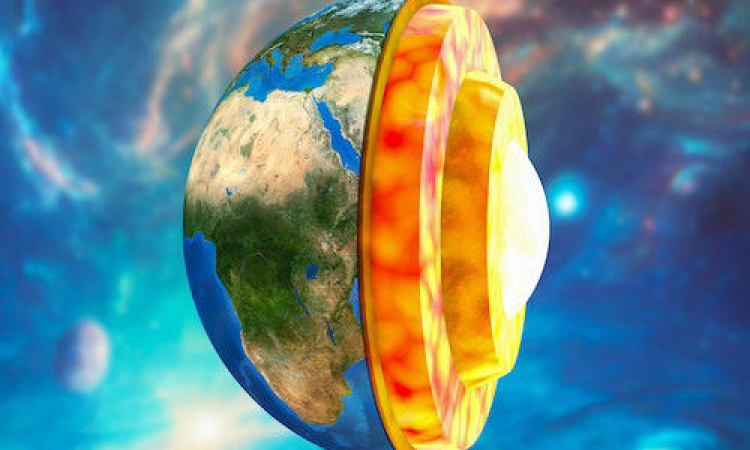
"In a Horizon special, naturalist Sir David Attenborough investigates whether the world is heading for a population crisis.
In his lengthy career, Sir David has watched the human population more than double from 2.5 billion in 1950 to nearly seven billion. He reflects on the profound effects of this rapid growth, both on humans and the environment.
While much of the projected growth in human population is likely to come from the developing world, it is the lifestyle enjoyed by many in the West that has the most impact on the planet. Some experts claim that in the UK consumers use as much as two and a half times their fair share of Earth's resources.
Sir David examines whether it is the duty of individuals to commit not only to smaller families, but to change the way they live for the sake of humanity and planet Earth. "
BBC Horizon: How Many Can Live on Planet Earth?
-
Monday, 01 March 2010 15:31
Rescue workers in dinghies cruised flooded streets on France's Atlantic coast Monday, searching for people still trapped in their homes by storms that smashed through concrete sea walls and killed at least 62 people across Western Europe.
The storm, called Xynthia, blew into France early Sunday with hurricane-force winds, flooding ports, destroying homes and leaving 1 million households without electricity. It also battered Belgium, Portugal, Spain and parts of Germany and snarled train and air travel throughout the continent.
Storms Smash Western Europe
|
|
|
|
|
|
Page 1 of 2 |