Find Us On
FinnishFrenchGermanItalianJapaneseSpanishChinese (T)
Skywatch Media News for-May 18th, 2012

Top Story

How Recent Solar Flares Are Affecting Humans
Recently we are experiencing an intensive amount of solar activity on the Sun which is affecting both the Earth and Humans.

Exactly what is a solar flare and how does it affect us?

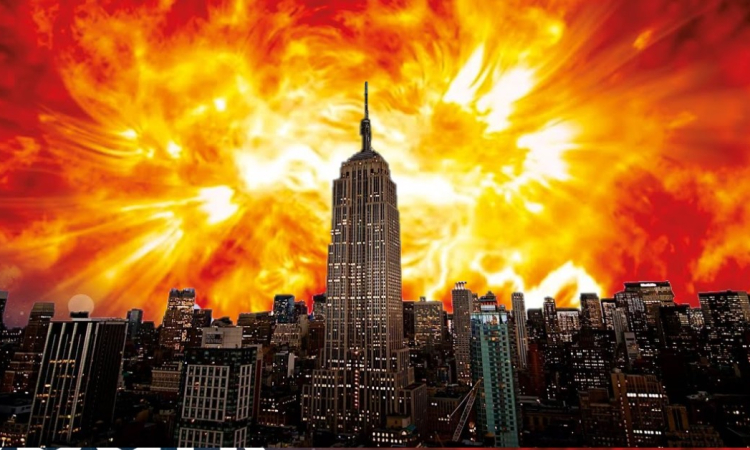
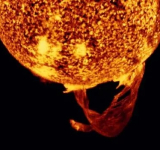
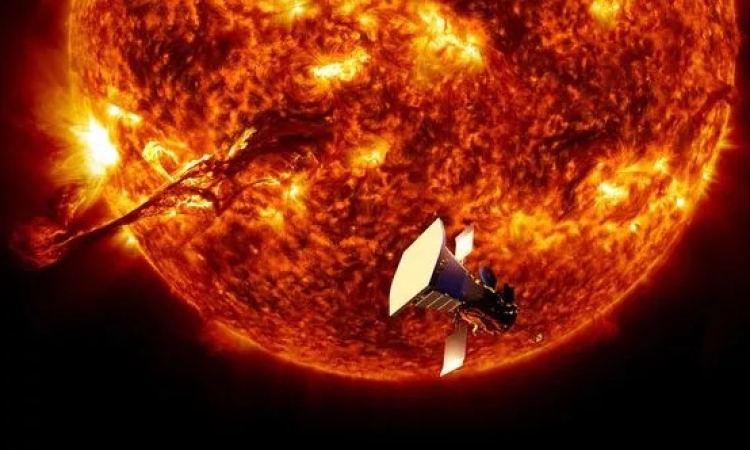
A solar flare is a magnetic storm on the Sun which appears to be a very bright spot and a gaseous surface eruption such as in the above photograph. Solar flares release huge amounts of high-energy particles and gases that are tremendously hot. They are ejected thousands of miles from the surface of the Sun.

Continue

Stunned scientists warn of dwindling oxygen

PDFPrintE-mail

Planet in Peril

Professor Ralph Keeling of Scripps Institute is worried. In fact, he's very worried.

According to the data Keeling has meticulously collected since 1989 the world is running out of breathable air—and the rate that it's losing oxygen is now on the verge of accelerating.

Monitoring oxygen levels around the world is Keeling's job. He's very good at his job. And the data confirms that Earth's oxygen supply is dwindling.

Keeling created the famous ' Keeling Curve,’ a graph that extrapolates the current trend of the oxygen depletion in the atmosphere.

[ The Cape Grim Observatory chart also depicts the ongoing depletion of breathable oxygen in the atmosphere.]

Less oxygen equals less life

A long time ago, the Earth was very rich in oxygen. The air contained such an abundance of the element—close to one-third of the atmosphere was oxygen—that animals and insects grew to gargantuan sizes. For instance, the ancestors of dragonflies once had four foot wingspans.

But now, due to overpopulation by humans, animals—even insect colonies—and deforestation, the oxygen in the air is become a diminishing resource.

Pollution has had a significant impact and events like the BP Deepwater Horizon Gulf disaster pumping up to a million times more methane into the ocean water serves only to speed up the already accelerating process.

Concerned scientists watching potential eruptions of super volcanoes—like the ones at Yellowstone or the Canary Islands—have already calculated the oxygen levels that would be displaced in our atmosphere should any of them erupt.

And the calculations' sums are enough to cause those in the know chronically sleepless nights.

The numbers have been crunched and the stark results stare researchers in the face: climate change is the least of our problems.

As heliophysicists have been pointing out, much of the global climate change has been driven by significant changes in the sun. A decade ago many astronomers took notice of the sun acting in ways never quite seen in history.

Now the sun is expected to reach solar maximum during the next several years and some scientists are making dire predictions about the havoc that solar flares may cause with our high tech civilization.

Most, however, overlook the connection between solar activity and volcanic eruptions: massive solar activity can lead to massive volcanic eruptions releasing trillions of cubic feet of methane, sulfur, CO2 and other gases that tend to displace free oxygen in the atmosphere.

A simple bleak equation distills the sum of their fears: less oxygen equals less life.

Warning signs mounting

Warning sign one: oceanic dead zones

The first sign of oxygen depletion occurs in the oceans. Dead zones—regions where oxygen has been depleted and life can no longer exist—were first documented in the late 1970s. As time progressed, researchers discovered the dead zones were growing in size and number. New dead zones were discovered and life in those areas either moved or died.

According to Carl Zimmer the New York Times science reporter, "the area of the global ocean without enough oxygen for animals to survive (less than 70 micromoles per kilogram to be exact) expanded by 4.5 million square kilometers (1.7 million square miles). That’s an area about half the size of the United States."

At the Danish Center for Earth System Science Gary Shaffer’s worst case scenario predicts that the oxygen levels in the oceans may drop by more than 20 per cent in the years ahead.

The dead zones continue to expand and the areas of oxygen depletion are accelerating.

Warning sign two: forest charcoal

Forest fires provide a measurement of the ongoing depletion of Earth's oxygen. Fires in an oxygen rich environment leave little or no carbon residue. The less oxygen available for combustion, the more charcoal remains as fire is unable to consume all the combustible material.

Over the eons, forest fires have produced greater and greater quantities of charcoal as less oxygen rich air causes fire to burn less efficiently. As the oxygen levels drop, more charcoal residue is produced.

This is exactly what has been happening and the phenomenon is well documented.

Warning sign three: methane and rapid Earth atmospheric change

Experts such as Northwestern University’s Gregory Ryskin (creator of the methane mass extinction hypothesis) have painted a scenario that could account for mass extinctions from terrestrial oxygen depletion.

While not a formal part of his hypothesis, the events Ryskin envisions would certainly lay the foundation for a rapid acceleration of oxygen depletion and the resulting mass death to follow—mass death on a planetary scale.

Atmospheric oxygen: from 30 to 20 to 5 percent?

Robert Berner of Yale University thinks oxygen levels plummeted after the Carboniferous before slowly rising to present day levels. His model tracks the oxygen level as 30 percent 300 million years ago. That plummeted to levels that we have today—about 19 to 21 percent depending on elevation. But then, after the Yucatan was struck by an asteroid roughly 65 million years ago, the dinosaurs began to die out.

Many ascribe the saurian extinction to the global cooling and darkness following the asteroid strike, but Berner believes what finally did the dinosaurs in wasn’t the large space rock, but lack of oxygen. He argues that oxygen levels plummeted to as low as 5 percent.

Other evidence suggests that oxygen levels fell sharply during other eras caused by volcanic eruption, the natural plant growing cycles, mass extinction of flora in the sea or other unknown causes.

One unknown cause could be the collapse of Earth’s magnetic field and the sun’s hard radiation bombarding the unprotected planet for thousands of years. As the plants died off and massive amounts of carbon were released into the atmosphere, the oxygen levels took a nosedive.

Crack of Doomsday could steal your breath away

As the oxygen depletes to levels unable to sustain Earth's higher life forms, some experts offer comfort by assuring that the end would come quickly. Asphyxia is not a pleasant death after all, and the image of billions gasping for one more breath—like flopping fish out of water—is a distinctly disturbing one.

Indeed, Mankind could go out not with a bang, but a shuddering, desperate gasp.

Of course, not all life on Earth would completely die off. It's postulated that certain mosses, hardy slime molds, resilient bacteria and viruses—as well as the more robust sea slugs—probably could weather the severe oxygen deprivation. They will make it through the tens of thousands of years required for the oxygen levels to slowly replenish after the planetary mass extinction.

Many experts also agree cockroaches could do well.

Source: Helium

Comments (0)

Featured News:

Flotilla of tsunami debris on way — Alaska now inundated

Flotilla of tsunami debris on way — Alaska now inundated

A flotilla of debris resulting from the tsunami last year in Japan is heading for the U.S. coast. It might take a while to arrive, but in the meantime Alaska already has its hands full. (Digital Journal) recently reported on the soccer ball... [More...]

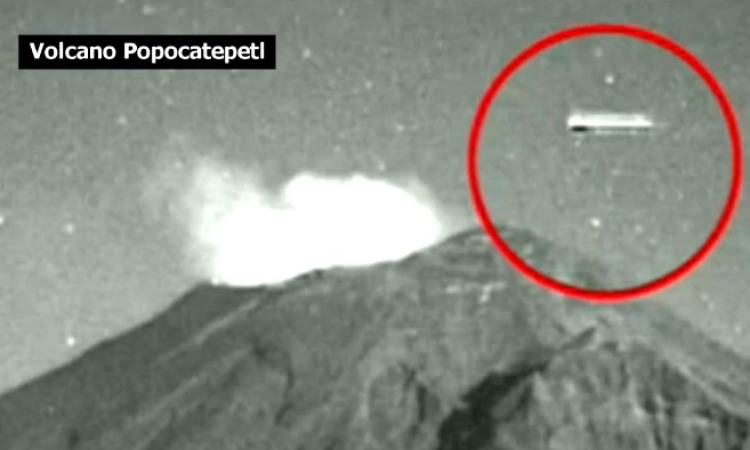
The surprising threat from Mexico's awakened volcano

The surprising threat from Mexico's awakened volcano

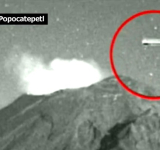
North America's second-tallest volcano recently rumbled to life, putting authorities on edge. Big eruptions of Mexico's massive Popocatepetl volcano are "few and far between," as one geologist says. Yet even without any dramatic fireworks,... [More...]

Fukushima Nuclear Reactor on Verge of Catastrophic Collapse

Fukushima Nuclear Reactor on Verge of Catastrophic Collapse

Imminent collapse of Reactor 4 could create a mass extinction event of both humans and animals. During a recent Congressional delegation trip to Japan, Oregon Senator Ron Wyden witnessed with his own eyes the horrific aftermath of the Fukushima... [More...]

Earth Unprepared for Mega Solar Storm

Earth Unprepared for Mega Solar Storm

Humanity needs to be much better prepared for massive solar storms, which can wreak havoc on our technology-dependent society, a prominent researcher warns. Powerful (blasts from the sun) have triggered intense geomagnetic storms on Earth... [More...]

NASA Calls Meteor Eruption

NASA Calls Meteor Eruption "Huge Event"

If you heard a large boom just before 8am Sunday, you weren't alone. Dr. Bill Cooke with the Lead, NASA Meteroid Environments Office said the meteor eruption caused quite the commotion. Cooke said the meteor's energy was a whopping 3.8... [More...]

East and West coast of Canada hit with earthquake swarms

East and West coast of Canada hit with earthquake swarms

A magnitude 4.7 earthquake struck about 200 kilometres west of Vancouver Island on Friday morning but there were no reports of it being felt by island residents. The quake struck around 1:36 a.m. PT, according to the Natural Resources... [More...]

Scientists Discover Instability in West Antarctic Ice Sheet

Scientists Discover Instability in West Antarctic Ice Sheet

AUSTIN, Texas — Using ice-penetrating radar instruments flown on aircraft, a team of scientists from the U.S. and U.K. have uncovered a previously unknown sub-glacial basin nearly the size of New Jersey beneath the West Antarctic Ice Sheet (WAIS)... [More...]

Stars of the Apocalypse

Stars of the Apocalypse

The Mayans weren't the only ones to believe that time is rapidly runing out for the human race. Elvis Presley, Jimi Hendrix and Michael Jackson all believed in doomsday, according to rock guru Michael C. Luckman, founder of the Cosmic Majority and... [More...]

Is Extreme Weather on the Rise?

Is Extreme Weather on the Rise?

A fascinating video posted to YouTube poses the question: Are extreme weather wind events on the rise around the world? A sampling of the many, widespread TV news reports and amateur video, compiled from just the first week of May 2012, seems to say... [More...]

Rise and Fall of an Underwater Volcano

Rise and Fall of an Underwater Volcano

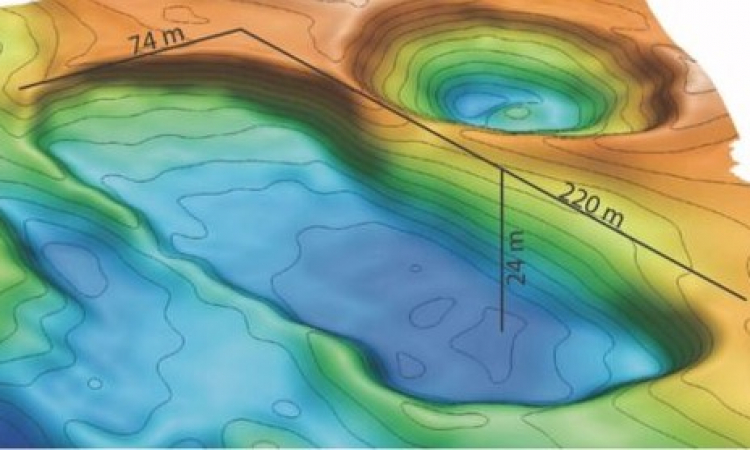
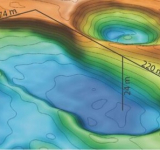
The violent rise and collapse of an underwater volcano in the Pacific Ocean is captured in startling clarity for the first time. Researchers studying the Monowai volcano, near Tonga, recorded huge changes in height in just two weeks. The... [More...]

Video Newsflash

Review www.earthfrenzyradio.com on alexa.com

Popular Stories